
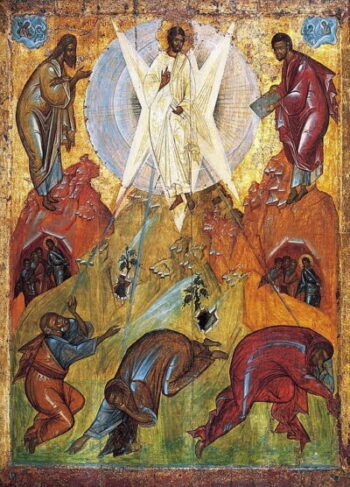
Rebbe Melech HaMoshiach Yehoshua
This religious reflection explores the identity of Yeshua ben Maryam through selected passages from the Orthodox Jewish Bible (OJB). Drawing on themes of redemption, resurrection, intercession, and the “blessed hope,” the piece reflects on the Christian understanding of Rebbe Melech HaMoshiach Yehoshua through a Jewish linguistic and scriptural lens.
Who is Yeshua ben Maryam (and Yosef?)
The question of who Yeshua ben Maryam is becomes particularly interesting when the language used to describe him is examined closely. Rather than approaching the Christian titles surrounding Jesus only through their familiar Greek or English forms, the Orthodox Jewish Bible presents them through Hebrew and Yiddish-inflected terminology.
The result is a different linguistic emphasis. Jesus Christ becomes Rebbe Melech HaMoshiach Yehoshua; “Son of God” becomes Zun fun Der Oybershter; and ideas of salvation, redemption and eternal life are expressed through Jewish scriptural vocabulary.
According to the Orthodox Jewish Bible (OJB)…
Romans 1:3–4
The Good News of Redemption of Hashem concerns the Zun fun Der Oybershter (Ben HaElohim of Hashem) born from the zera Dovid, as far as basar is concerned.
But, as far as the Ruach Hakodesh is concerned, appointed to be Ben HaElohim in power by means of Moshiach’s Techiyah [Resurrection] from HaMesim.
The language here immediately places Yeshua within a distinctly Jewish framework. The reference to the zera Dovid, the seed of David, connects his identity to the Davidic line, while Techiyah, resurrection, becomes the decisive manifestation of divine power.
The expression Zun fun Der Oybershter is especially striking. Rather than simply encountering the familiar English phrase “Son of God,” the reader is confronted with a rendering that deliberately carries the text back into a Jewish linguistic world. The change in vocabulary invites the question of how much meaning is altered, recovered, or newly emphasised when a familiar Christian formulation is expressed through Hebrew and Yiddish.
1 Timothy 2:5
For Adonoi echad hu (there is one G-d) and there is also metavekh echad (one melitz, one between Hashem and kol Bnei Adam, the man Rebbe, Melech HaMoshiach Yehoshua.
Here the language of mediation becomes central. The OJB’s terminology places emphasis on metavekh, a mediator or intermediary, and melitz, one who intercedes or represents. The familiar Christian concept of a mediator is therefore expressed through vocabulary that evokes the relationship between Hashem and humanity.
The title Rebbe, Melech HaMoshiach Yehoshua is consequently more than a change of names. It presents the figure of Jesus through a vocabulary of rabbinic authority, kingship and messianic expectation.
Hebrews 7:25
From which also he is able to completely deliver to the Geulah (Redemption) and Yeshu’at Eloheinu the ones approaching Hashem through him, as he has Chayyei Ein Sof (Endless Life) and always lives to intercede in techinnah (supplication) for them.
The emphasis here moves from identity to continuing action. Yeshua is presented as one who lives continually to intercede. The OJB’s use of Geulah, redemption, and Chayyei Ein Sof, endless life, gives the passage a vocabulary of Jewish redemption and eternity.
This makes the idea of resurrection more than a past event. The resurrected Moshiach is presented as living and acting in the present, with intercession forming part of his continuing relationship with those approaching Hashem through him.
A Blessed Hope?
Hebrews 13:5
Fier zich (comport oneself) in your derech free of chamdanut (covetousness), being content with what you have, for He Himself has said, LO ARPECHA V’LO E’EZVECHA (“I will never desert you, nor will I ever forsake you”).
This passage introduces a different dimension of hope: not the expectation of a future appearance, but the assurance of divine presence. The Hebrew phrase LO ARPECHA V’LO E’EZVECHA carries the force of a promise that Hashem will neither abandon nor forsake his people.
Hebrews 13:6
So that we say with bitachon, HASHEM LI my helper, LO IRA MAH YA’ASEH LI ADAM (“The L-rd is my helper, I will not be afraid. What shall man do to me?”)
The following verse continues the movement from divine promise to human confidence. Bitachon, trust, becomes the response to the assurance that Hashem is the helper. The language is therefore not simply about escaping fear, but about locating confidence in the relationship between humanity and God.
Titus 2:13
Awaiting the tikvah hameashsheret (the blessed hope), the appearing of the kavod HaEloheinu HaGadol and Moshieynu, Rebbe Melech HaMoshiach Yehoshua.
This is where the phrase tikvah hameashsheret, the blessed hope, becomes particularly important. The Christian expectation is directed towards an appearing: the manifestation of glory and the coming of Moshieynu, our Saviour.
Read through this Jewish linguistic lens, the phrase “blessed hope” is therefore not merely an abstract theological idea. It becomes an expectation rooted in tikvah, hope, and directed towards the appearance of the Moshiach.
What emerges from these passages is a movement between identity and expectation: Yeshua is described as the descendant of David, Ben HaElohim, mediator, Moshiach and one who intercedes; yet the believer is also directed towards the future appearance of his glory.
This is where the linguistic transformation becomes most interesting. When “Jesus Christ” becomes Rebbe Melech HaMoshiach Yehoshua, the reader is encouraged to hear the title within a Jewish vocabulary of kingship, messiahship, redemption and hope. The terminology does not simply translate the Christian message; it reframes how that message is heard.
Lost in Translation?
The deeper question, then, is what happens to meaning when a familiar Christian expression is carried back through Hebrew and Yiddish. Translation can conceal as much as it reveals. “Son of God,” “Messiah,” “Saviour,” “mediator” and “blessed hope” each arrive with histories of interpretation, but the OJB deliberately places them within a Jewish linguistic environment.
That makes the language itself part of the theological reflection. Zun fun Der Oybershter, Rebbe Melech HaMoshiach Yehoshua, Geulah, Chayyei Ein Sof and tikvah do not merely decorate an English text. They ask the reader to listen differently.
Perhaps the most revealing part of the exercise is therefore not deciding whether one translation is “right” and another “wrong”, but noticing what each vocabulary makes visible. The Christian understanding of Yeshua is being encountered here through a Jewish linguistic lens — and that shift in language changes the texture of the reading.

Saved as a favorite, I like your blog!
“I have to be leaving, but I won’t let that come between us”. – Bob
I enjoyed how reflective and calm this felt. It’s simple to follow but still leaves a real impression, and I appreciate you putting it out.